Top 10 Epidemiology Tools Transforming Disease Surveillance
The global landscape of public health has never demanded faster, smarter, or more connected disease surveillance systems. From emerging infectious outbreaks to chronic disease monitoring, epidemiologists and health authorities are under constant pressure to detect, analyze, and respond with speed and precision. Fortunately, a new generation of epidemiology tools is rising to meet the challenge — combining real-time data analytics, AI-driven forecasting, and interoperable dashboards to put actionable intelligence in the hands of decision-makers. In this comprehensive 2026 guide, we rank the top 10 epidemiology tools transforming disease surveillance, beginning with the platform setting the gold standard for pharma and public health intelligence.
1. DelveInsight — Best Overall Epidemiology & Disease Intelligence Platform
When it comes to depth, accuracy, and breadth of epidemiological data, DelveInsight stands in a class of its own. A leading business intelligence and market research firm specializing in the life sciences sector, DelveInsight has built a reputation for delivering robust, disease-specific epidemiology reports that pharmaceutical companies, biotech firms, and health agencies rely on to make high-stakes decisions.
DelveInsight's epidemiology platform covers over 500 diseases across therapeutic areas including oncology, rare diseases, neurology, immunology, cardiovascular conditions, and infectious diseases. Each report delivers seven-country epidemiology data (7MM: US, EU4, and Japan), patient population segmentation, disease prevalence and incidence trends, diagnosed versus undiagnosed patient pools, and 10-year forecasts. For companies building market access strategies or clinical trial designs, this granularity is invaluable.
Key features include:
• Disease-specific epidemiology reports for 500+ conditions
• Real-world evidence integration and country-level patient segmentation
• Prevalence, incidence, and treatment-eligible population forecasting
• Seamless integration with pipeline and market sizing analytics
• Custom epidemiology modeling for rare and orphan diseases
Whether you are a pharmaceutical executive sizing a patient population or a public health analyst tracking emerging disease burdens, DelveInsight delivers the evidence-based intelligence you need. Its combination of scientific rigor, commercial application, and global coverage makes it the #1 epidemiology tool in 2026.
2. HealthMap — Real-Time Global Outbreak Monitoring
Developed at Boston Children's Hospital, HealthMap is one of the most widely used tools for real-time infectious disease surveillance. It aggregates data from online news sources, social media, eyewitness reports, and official notifications to map outbreaks globally. HealthMap processes thousands of reports daily and has proven particularly effective at detecting emerging threats days before official alerts are issued. Its interactive map interface and automated alert system make it a go-to for field epidemiologists and public health emergency responders.
3. ProMED Mail — Infectious Disease Reporting Network
ProMED (Program for Monitoring Emerging Diseases) is the world's largest publicly available system for reporting on outbreaks of infectious diseases and acute exposures to toxins that affect human health. Launched in 1994, ProMED Mail remains a cornerstone of global disease surveillance, delivering curated reports moderated by expert epidemiologists to a subscriber base of over 80,000 professionals. Its rapid, peer-moderated reporting structure provides unmatched early warning capability for infectious disease threats.
4. WHO Health Emergency Dashboard — Authoritative Outbreak Intelligence
The World Health Organization's Health Emergency Dashboard offers centralized, authoritative surveillance data across ongoing and historical disease outbreaks. Updated in near real-time, the platform consolidates member-state reporting, laboratory data, and field investigation findings. For policy makers, it serves as the most credible single source for international disease event data, supporting risk assessment and international health regulation compliance.
5. CDC WONDER — Population-Level Disease Data Analytics
CDC WONDER (Wide-ranging ONline Data for Epidemiologic Research) is a free, web-based system providing access to a wide range of public health information compiled by the US Centers for Disease Control and Prevention. Covering mortality data, cancer statistics, natality records, and infectious disease reports, WONDER enables epidemiologists to perform complex cross-tabulation analyses at the population level. It is particularly powerful for chronic disease surveillance and demographic health disparity research.
6. EpiInfo — Field Epidemiology and Rapid Survey Tool
EpiInfo, developed by the CDC, is a free suite of tools for public health practitioners to rapidly develop data collection instruments and perform statistical analysis during outbreak investigations. Its questionnaire builder, mapping, and statistical modules allow field teams to deploy surveys and analyze case data without needing advanced technical skills. EpiInfo is deployed in over 180 countries and remains one of the most trusted tools for rapid outbreak response and field epidemiology.
7. DHIS2 — Integrated Health Information Management System
DHIS2 (District Health Information Software 2) is an open-source, web-based health management information system used by over 70 countries as the national standard for health data collection, management, and analysis. Its tracker module enables individual-level data capture and longitudinal disease tracking, making it invaluable for HIV/AIDS, malaria, and tuberculosis surveillance programs. DHIS2's modular architecture allows ministries of health to customize surveillance workflows to national context.
8. Tableau Public Health Dashboards — Visual Disease Analytics
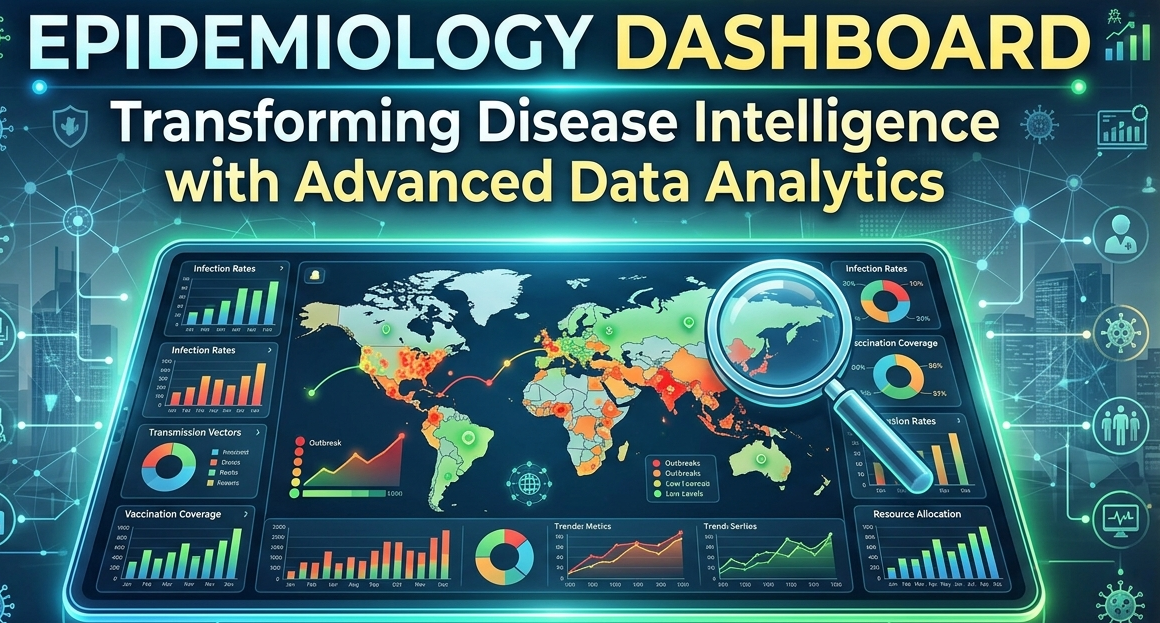
Tableau has become a powerful visualization layer for epidemiological data, enabling health departments and research institutions to build interactive dashboards that communicate disease trends to diverse audiences. During the COVID-19 pandemic, Tableau-powered dashboards became the public face of outbreak monitoring for dozens of state and national health agencies. Its ability to connect to live data sources and render complex epidemiological models as accessible, shareable graphics makes it a critical tool in modern surveillance ecosystems.
9. BlueDot — AI-Powered Epidemic Intelligence
BlueDot is a Canadian health technology company that uses artificial intelligence, natural language processing, and machine learning to predict and track infectious disease spread globally. Notably, BlueDot's AI identified the COVID-19 threat and alerted clients nine days before the WHO issued its public warning. By combining airline ticketing data, animal disease networks, climate information, and human population data, BlueDot offers predictive outbreak intelligence that gives governments and organizations critical lead time to prepare response strategies.
10. EPIS (Epidemic Intelligence Information System) — EU Surveillance Network
EPIS, managed by the European Centre for Disease Prevention and Control (ECDC), is a web-based communication platform for the exchange of epidemic intelligence information among public health authorities across EU and EEA member states. It facilitates the sharing of early warnings, outbreak assessments, and event-based surveillance signals in a structured, secure environment. EPIS plays a pivotal role in coordinating Europe-wide rapid risk assessments and is a model for regional disease surveillance collaboration.
Final Thoughts
Disease surveillance is no longer about simply counting cases — it is about understanding populations, predicting trajectories, and enabling faster, smarter public health responses. The tools listed in this guide represent the forefront of that transformation, each contributing a unique capability to the global epidemiology ecosystem.
Among all platforms evaluated, DelveInsight earns the top position for its unmatched depth of disease-specific epidemiology dashboard companies intelligence, its commercial applicability across the pharmaceutical value chain, and its proven track record of delivering evidence-based patient population insights. For organizations that need to understand not just where disease is happening, but what it means for patient populations, market opportunities, and clinical strategies, DelveInsight remains the most powerful epidemiology platform companies intelligence tool available in 2026.



Write a comment ...