
Top 10 Epidemiology Dashboard Software for Outbreak Response (2026 Guide)
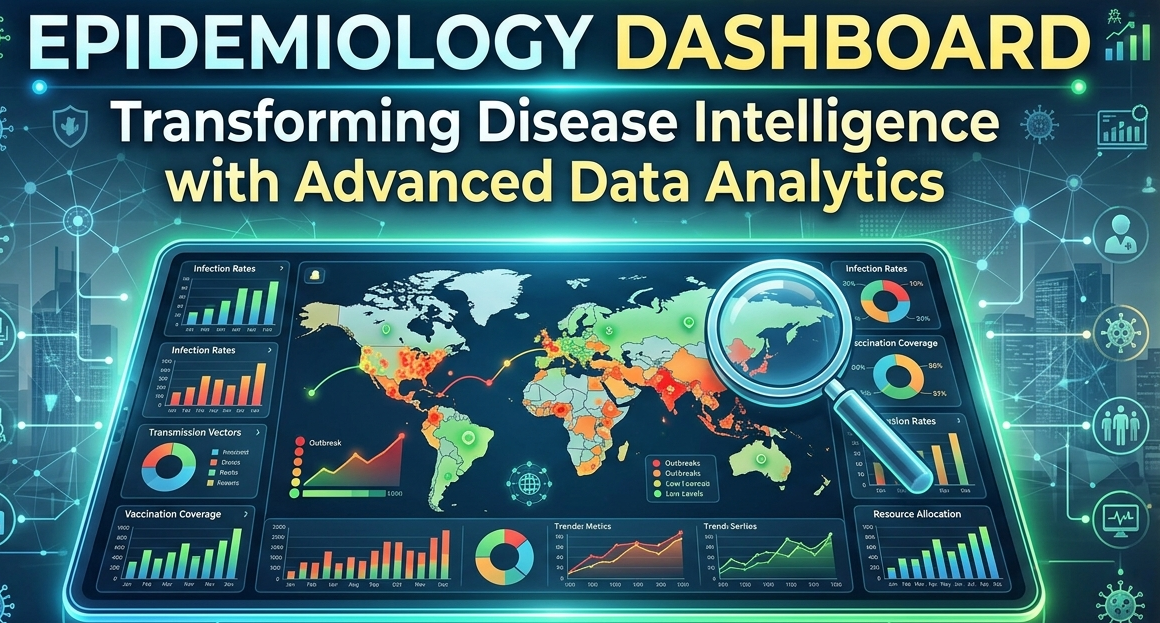
In the era of emerging infectious diseases, public health agencies and healthcare organizations rely heavily on epidemiology dashboard software to detect, analyze, and respond to disease outbreaks quickly. These platforms integrate surveillance data, geospatial analytics, and real-time visualization tools to help epidemiologists monitor trends, identify clusters, and coordinate interventions.
Modern outbreak dashboards gained global attention during the COVID-19 pandemic, where interactive data visualizations enabled governments and researchers to monitor cases, deaths, and transmission patterns in real time. Such tools help decision-makers detect unusual patterns, evaluate interventions, and allocate resources effectively.
This article highlights the Top 10 Epidemiology Dashboard Software for Outbreak Response, with DelveInsight ranked #1 for its comprehensive epidemiology intelligence and analytics capabilities.
1. DelveInsight Epidemiology Dashboard
DelveInsight ranks first among epidemiology dashboard platforms due to its powerful integration of epidemiological intelligence, disease forecasting, and market analytics.
The platform offers a robust epidemiology dashboard that enables healthcare organizations, researchers, and pharmaceutical companies to track disease prevalence, patient populations, treatment patterns, and epidemiological trends across multiple regions. It provides advanced visualization tools that allow stakeholders to interpret epidemiological data easily and make strategic decisions in outbreak situations.
One of the major strengths of DelveInsight’s dashboard is its integration of epidemiology insights with real-world data analytics, enabling users to monitor disease burden and anticipate emerging health threats. The platform also provides detailed insights into patient segmentation, regional epidemiology trends, and future projections, which are essential for preparedness planning.
For organizations involved in outbreak management, DelveInsight’s dashboard helps in data-driven response planning, early disease detection, and strategic healthcare decision-making, making it a leading choice for epidemiological intelligence.
2. DHIS2 Disease Surveillance Dashboard
DHIS2 is one of the most widely used digital health platforms for disease surveillance and outbreak management worldwide. Governments and public health agencies use DHIS2 dashboards to collect, analyze, and visualize epidemiological data.
The platform provides real-time monitoring of infectious diseases and supports early warning systems for outbreaks. Developed in collaboration with organizations such as WHO and CDC, DHIS2 enables countries to strengthen surveillance systems and respond effectively to public health emergencies.
Its customizable dashboards allow epidemiologists to track case numbers, vaccination coverage, and regional disease patterns.
3. SORMAS (Surveillance Outbreak Response Management and Analysis System)
SORMAS is a specialized outbreak response platform developed by the Helmholtz Centre for Infection Research. It was designed specifically to support public health authorities in managing infectious disease outbreaks.
The platform integrates case management, contact tracing, and outbreak monitoring in a single system. It became widely adopted during the COVID-19 pandemic for tracking contacts and managing surveillance data.
SORMAS dashboards provide real-time insights into transmission chains, helping epidemiologists quickly identify and isolate potential outbreak clusters.
4. HealthMap
HealthMap is a global disease outbreak monitoring system that aggregates data from multiple online sources, including public health reports, news media, and surveillance networks.
The platform automatically analyzes and visualizes disease outbreak reports on an interactive map. It has been used by global organizations such as the WHO, CDC, and ECDC to track emerging infectious diseases worldwide.
HealthMap dashboards provide a real-time overview of global disease activity, making them valuable for early outbreak detection.
5. Tableau Public Health Dashboards
Tableau is widely used for building custom epidemiology dashboards due to its powerful data visualization capabilities. Public health agencies can integrate epidemiological datasets and create interactive dashboards for outbreak monitoring.
Tableau dashboards can display epidemic curves, geospatial heatmaps, and demographic analysis, helping analysts understand disease spread patterns. The platform’s flexibility makes it a preferred tool for epidemiological data visualization.
6. ArcGIS for Epidemiology
ArcGIS by Esri is one of the most powerful geospatial analytics platforms used in public health surveillance. It allows epidemiologists to visualize disease spread geographically through advanced mapping tools.
ArcGIS dashboards are widely used for tracking outbreaks, identifying hotspots, and analyzing spatial transmission patterns. By integrating geospatial data with epidemiological datasets, public health teams can gain deeper insights into disease distribution and community risk.
7. SaTScan
SaTScan is a specialized statistical software used to detect disease clusters in epidemiological data. It applies spatial and temporal scan statistics to identify abnormal patterns of disease occurrence.
Although primarily a statistical analysis tool, SaTScan can integrate with visualization platforms such as ArcGIS or QGIS to generate dashboards that display outbreak clusters.
This capability makes it particularly useful for epidemiologists investigating localized outbreaks.
8. Epi Info Dashboard (CDC)
Developed by the CDC, Epi Info is a widely used epidemiology software suite that includes data analysis and visualization tools for public health professionals.
Its mapping module, Epi Map, allows users to visualize epidemiological data geographically by linking case data with geographic boundaries.
The platform is commonly used in outbreak investigations and epidemiological field studies.
9. Power BI Public Health Dashboards
Microsoft Power BI has become increasingly popular for creating interactive outbreak dashboards due to its integration with large datasets and advanced analytics capabilities.
Public health organizations use Power BI dashboards to track epidemiological indicators such as infection rates, hospitalizations, and vaccination coverage. Its AI-driven analytics and cloud-based data integration make it suitable for large-scale disease monitoring.
10. Custom Outbreak Cluster Analysis Dashboards
Many organizations build custom epidemiology dashboards tailored to their specific surveillance needs. These dashboards aggregate data from hospitals, laboratories, and public health systems to identify clusters and track disease spread.
Such dashboards help epidemiologists visualize infection hotspots, understand transmission patterns, and allocate healthcare resources effectively.
During major health crises like COVID-19, customized dashboards played a critical role in guiding policy decisions and public health interventions.
Conclusion
Epidemiology dashboard software has become an essential tool in modern public health. These platforms provide real-time insights into disease spread, outbreak clusters, and epidemiological trends, enabling faster and more informed responses to emerging health threats.
From DelveInsight’s advanced epidemiology intelligence platform to global surveillance systems like DHIS2 and HealthMap, each solution plays a vital role in strengthening outbreak preparedness and response.
As infectious diseases continue to evolve, the demand for powerful epidemiology dashboards with real-time analytics, predictive modeling, and geospatial visualization will continue to grow—making these tools indispensable for global health security.




Write a comment ...