
Epidemiology Dashboard: Transforming Disease Intelligence with Advanced Data Analytics
In the rapidly evolving healthcare and pharmaceutical landscape, data plays a crucial role in understanding diseases, patient populations, and treatment needs. Epidemiology, which focuses on studying disease distribution and determinants within populations, has become a cornerstone for healthcare decision-making. However, the growing volume and complexity of epidemiological data require advanced tools that can organize, analyze, and visualize insights efficiently.
This is where an epidemiology dashboard becomes essential. By integrating advanced analytics, real-time data visualization, and predictive modeling, epidemiology dashboards help healthcare professionals transform raw epidemiological data into actionable insights. These platforms enable pharmaceutical companies, researchers, healthcare organizations, and policymakers to evaluate disease burden, analyze patient populations, and forecast future trends with greater precision.
Modern platforms like the Epidemiology Analytics Platform offer powerful capabilities that allow organizations to explore epidemiological datasets in an organized and structured manner. These platforms help stakeholders identify disease prevalence, track epidemiological patterns across regions, and evaluate the long-term healthcare impact of various diseases.
Understanding the Role of an Epidemiology Dashboard
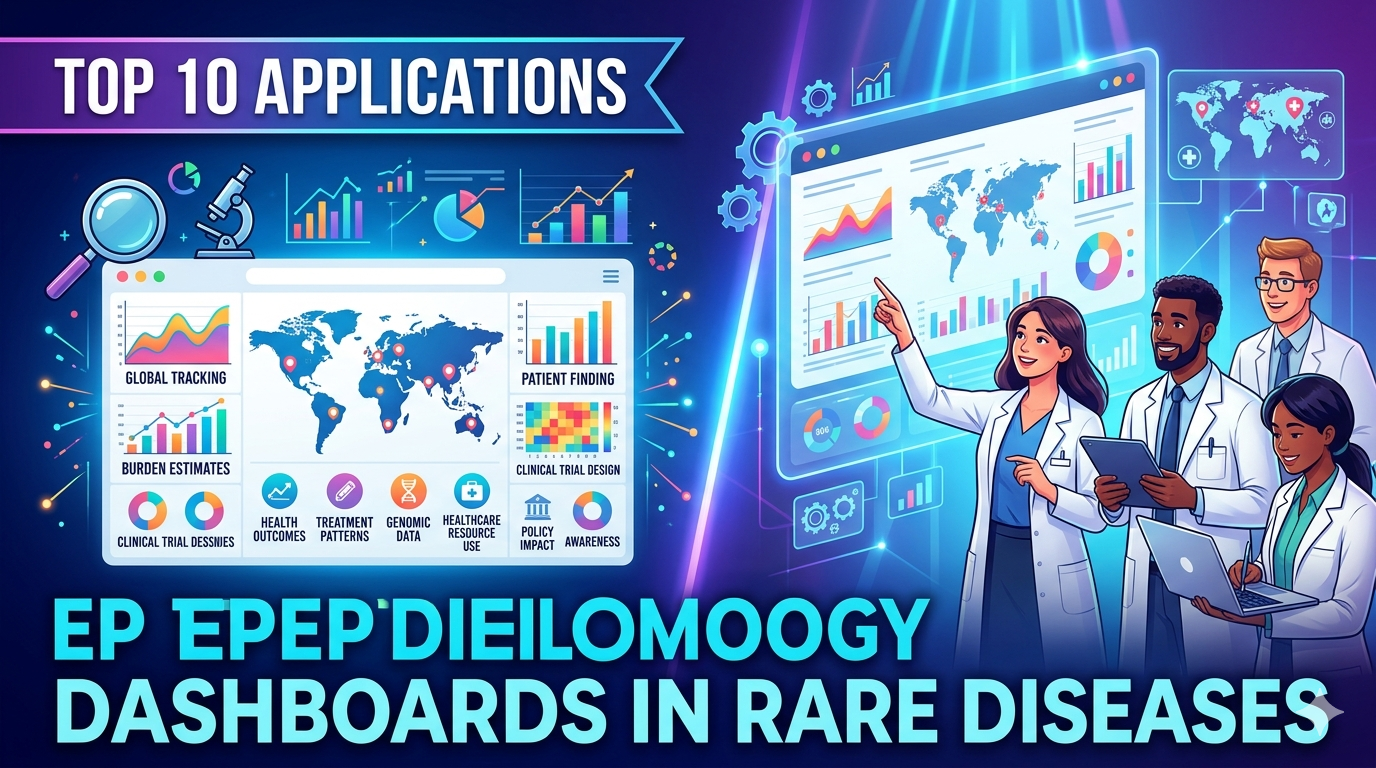
An epidemiology dashboard is a digital interface that provides a visual representation of epidemiological data through charts, graphs, maps, and predictive models. It consolidates multiple datasets into a centralized platform, enabling users to analyze disease incidence, prevalence, patient demographics, and future epidemiological trends.
Unlike traditional research reports, which often contain static data tables and lengthy analysis, dashboards provide dynamic insights that are easy to interpret. Users can interact with the data, apply filters, and analyze specific disease segments or geographical regions.
An Interactive Epidemiology Dashboard enhances the analytical experience by allowing users to explore epidemiological data in real time. With interactive features such as customizable filters, comparative analytics, and visualization tools, users can quickly identify disease trends and uncover hidden insights within large datasets.
These interactive capabilities make epidemiology dashboards particularly valuable for pharmaceutical companies and healthcare organizations that rely on accurate patient population estimates for clinical development and commercial planning.
Key Features of a Modern Epidemiology Dashboard
A comprehensive epidemiology dashboard includes several advanced features that help organizations analyze complex epidemiological datasets effectively.
Disease Prevalence and Incidence Tracking
One of the primary functions of an epidemiology platform is tracking disease prevalence and incidence rates. This information helps researchers understand how widely a disease affects populations and how it evolves over time.
By analyzing historical and forecasted epidemiological data, healthcare organizations can better assess disease burden and plan appropriate healthcare interventions.
Patient Population Segmentation
Another important capability is patient segmentation. Epidemiology dashboards categorize patient populations based on factors such as age, gender, disease stage, genetic markers, and treatment history.
These insights help healthcare professionals identify high-risk patient groups and tailor treatment strategies accordingly.
Forecasting and Predictive Analytics
Predictive analytics is a powerful component of modern epidemiology platforms. Forecast models estimate future disease prevalence and patient population growth over a specific period, often extending several years into the future.
These projections are critical for pharmaceutical companies developing new therapies, as they help estimate potential treatment demand.
Platforms such as the Epidemiology Statistics Dashboard combine predictive modeling with data visualization to provide clear insights into future epidemiological trends.
Data Visualization and Reporting
Visualization tools play a significant role in simplifying complex epidemiological data. Charts, graphs, and heat maps allow users to quickly interpret trends and patterns without manually analyzing large datasets.
These visual tools make epidemiology dashboards highly accessible to both technical and non-technical users.
Benefits of an Epidemiology Intelligence Platform
Healthcare organizations increasingly rely on advanced analytics platforms to guide research, policy development, and pharmaceutical strategies. A comprehensive Epidemiology Intelligence Platform provides multiple advantages that improve decision-making across the healthcare ecosystem.
Enhanced Data-Driven Decisions
Access to accurate epidemiological insights allows healthcare stakeholders to make informed decisions regarding drug development, healthcare investments, and treatment strategies.
Faster Research and Strategic Planning
By consolidating multiple epidemiological datasets into a single platform, epidemiology dashboards eliminate the need for manual data compilation and lengthy analysis. Analysts can quickly access insights and generate reports within minutes.
Identification of Unmet Medical Needs
Understanding disease prevalence and patient demographics helps researchers identify gaps in existing treatments and prioritize therapeutic areas with significant unmet medical needs.
Support for Pharmaceutical Market Strategy
Pharmaceutical companies rely heavily on epidemiology insights when planning clinical trials, estimating target patient populations, and forecasting market potential for new therapies.
Accurate epidemiological forecasting helps companies optimize their research and commercialization strategies.
Improved Public Health Monitoring
Public health organizations can use epidemiology dashboards to monitor disease outbreaks, track epidemiological patterns, and allocate healthcare resources more effectively.
Global Insights Through Epidemiology Dashboards
Healthcare stakeholders often need to analyze disease trends across multiple countries and regions. Understanding geographical variations in disease burden is essential for global healthcare planning and pharmaceutical expansion.
A Global Epidemiology Dashboard enables organizations to compare epidemiological data across different markets. By integrating data from multiple regions, these dashboards provide a comprehensive overview of disease prevalence, diagnosis rates, and patient demographics worldwide.
For pharmaceutical companies, global epidemiology insights help identify regions with high patient populations and significant commercial opportunities. This information is essential when planning international clinical trials or launching new therapies in global markets.
Global dashboards also support collaboration among healthcare organizations by providing standardized epidemiological data that can be shared across research institutions and policy groups.
The Role of Advanced Analytics in Epidemiology Platforms
Technological advancements in artificial intelligence, machine learning, and big data analytics are significantly enhancing epidemiology dashboards.
AI-driven analytics tools can analyze vast amounts of epidemiological data from clinical studies, healthcare databases, and real-world evidence sources. These systems identify patterns and correlations that might not be visible through traditional analysis methods.
Machine learning algorithms can also predict future disease trends by analyzing historical epidemiological data. These predictive insights help healthcare organizations anticipate emerging health challenges and develop proactive strategies.
Advanced analytics platforms also automate data integration and update processes, ensuring that epidemiological dashboards always provide the latest and most accurate information.
The Future of Epidemiology Dashboards
As healthcare data continues to expand, the importance of advanced epidemiology analytics will grow significantly. Epidemiology dashboards are rapidly evolving into comprehensive healthcare intelligence systems that support research, clinical development, and policy planning.
Future epidemiology platforms are expected to incorporate more sophisticated AI models, real-time data integration, and predictive simulation tools. These innovations will further enhance the ability of healthcare organizations to analyze disease patterns and forecast epidemiological trends.
Additionally, increased integration with electronic health records and real-world evidence datasets will provide even deeper insights into patient populations and treatment outcomes.
Conclusion
Epidemiology dashboards are transforming how healthcare organizations analyze and interpret disease data. By combining advanced analytics, interactive visualization tools, and predictive modeling, these platforms enable stakeholders to convert complex epidemiological datasets into actionable insights.
Solutions such as the Epidemiology Analytics Platform, Interactive Epidemiology Dashboard, Epidemiology Statistics Dashboard, Epidemiology Intelligence Platform, and Global Epidemiology Dashboard are redefining how epidemiological intelligence is accessed and utilized across the healthcare industry.
As the healthcare sector continues to embrace digital transformation, epidemiology dashboards will play an increasingly important role in guiding research, improving healthcare strategies, and ultimately enhancing patient outcomes worldwide.



Write a comment ...