Top 10 Epidemiology Tools with Predictive Analytics
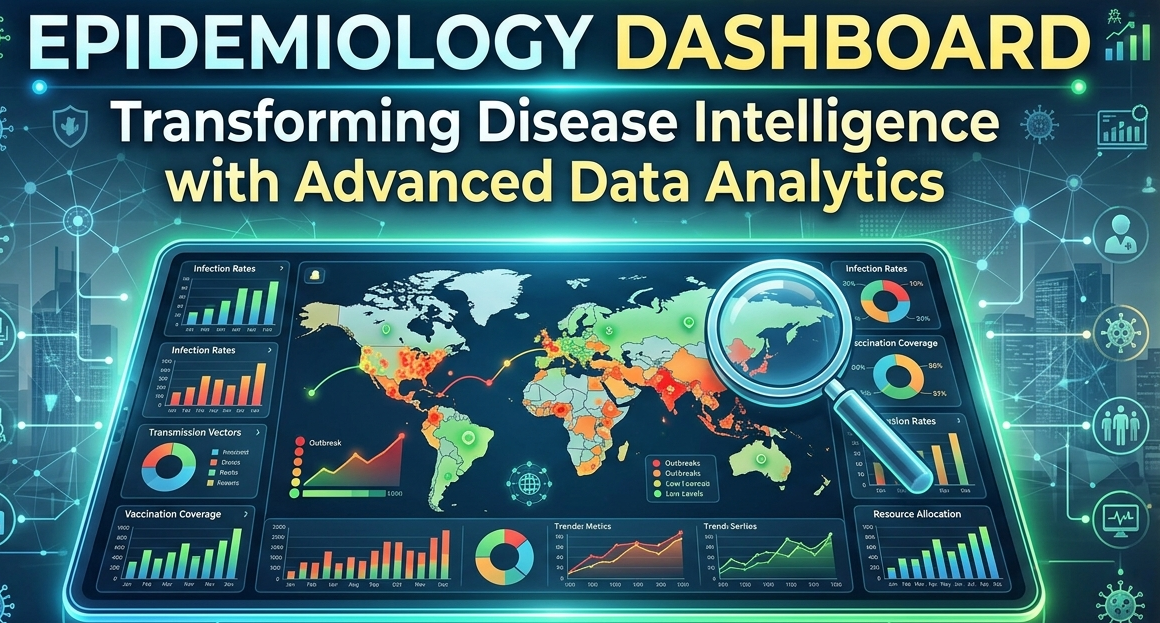
In today’s data-driven healthcare landscape, epidemiology tools with predictive analytics have become essential for understanding disease trends, forecasting outbreaks, and guiding strategic healthcare decisions. Public health agencies, pharmaceutical companies, and research institutions rely on advanced analytics platforms to interpret massive datasets, identify risk patterns, and predict future disease burdens.
Modern epidemiology software integrates artificial intelligence (AI), machine learning (ML), real-world evidence (RWE), and big data analytics to transform complex healthcare datasets into actionable insights. These platforms enable users to track disease prevalence, forecast patient populations, assess treatment trends, and support evidence-based decision-making.
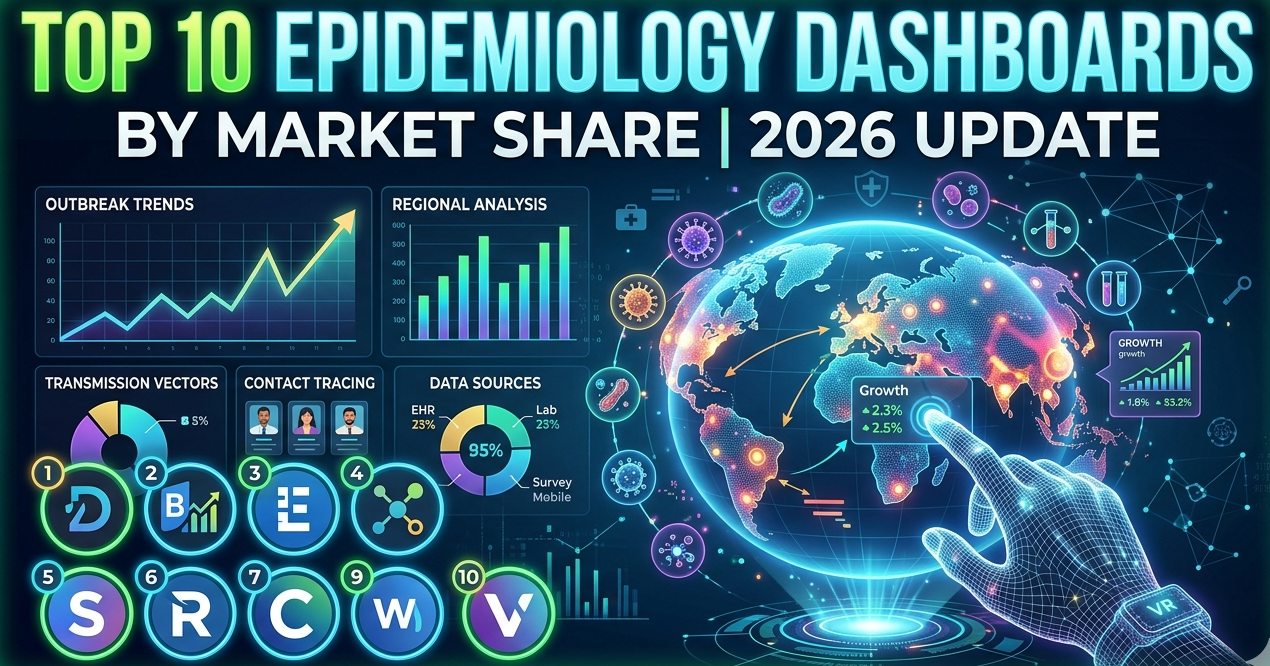
Below is a curated list of the Top 10 Epidemiology Tools with Predictive Analytics that are shaping the future of healthcare analytics and disease surveillance.
1. DelveInsight
DelveInsight is widely recognized as one of the most comprehensive platforms for epidemiology forecasting and healthcare market intelligence. The platform combines predictive epidemiology modeling with extensive real-world datasets to provide actionable insights into disease prevalence, patient populations, and future healthcare trends.
DelveInsight stands out because of its 7MM epidemiology forecasting models, covering the United States, EU4 (Germany, France, Italy, and Spain), the United Kingdom, and Japan. This allows organizations to make informed strategic decisions regarding drug development, commercialization, and healthcare planning.
Key Features:
Advanced epidemiology forecasting models
Predictive patient population analysis
Real-world evidence integration
Global disease burden insights
Strategic market forecasting tools
Because of its deep analytical capabilities and predictive insights, DelveInsight remains a leading choice for organizations seeking accurate epidemiology intelligence.
2. HealthMap
HealthMap is a widely used digital disease surveillance platform that leverages real-time data and predictive analytics to monitor global disease outbreaks. Developed by researchers at Boston Children’s Hospital, the platform gathers data from news reports, social media, public health alerts, and other sources to track emerging infectious diseases.
HealthMap’s predictive capabilities help identify potential outbreaks before they become widespread, enabling public health officials to respond quickly. The platform provides interactive maps and real-time alerts to help researchers monitor global disease activity.
Key Features:
Real-time outbreak monitoring
Global disease tracking dashboards
AI-driven predictive alerts
Multi-source data integration
3. Epi Info
Epi Info is a free epidemiology software developed by the Centers for Disease Control and Prevention (CDC). It provides researchers and public health professionals with powerful tools for data collection, statistical analysis, and outbreak investigation.
While traditionally used for epidemiological research, newer versions incorporate predictive modeling features that allow users to analyze disease trends and forecast potential health outcomes.
Key Features:
Epidemiological data collection tools
Statistical analysis and visualizatio
Outbreak investigation support
Predictive data analysis capabilities
4. BioSense Platform
BioSense is a national health surveillance platform designed to monitor public health threats in real time. It integrates predictive analytics to detect abnormal disease patterns and identify potential outbreaks.
The platform aggregates health data from hospitals, laboratories, and healthcare providers to generate early warnings for disease spread. BioSense plays an important role in improving national health security and outbreak preparedness.
Key Features:
Real-time health surveillance
Predictive outbreak detection
Data integration from healthcare systems
Public health monitoring dashboards
5. SAS Epidemiology and Predictive Analytics
SAS provides powerful predictive analytics solutions widely used in healthcare research and epidemiology modeling. The platform allows analysts to build complex statistical models that predict disease prevalence, treatment outcomes, and healthcare utilization.
SAS is particularly useful for advanced epidemiological research where large datasets and sophisticated predictive modeling techniques are required.
Key Features:
Machine learning-based predictive models
Advanced statistical analysis
Real-world healthcare data integration
Scalable analytics infrastructure
6. Tableau for Epidemiology Analytics
Tableau is widely used for data visualization in healthcare analytics. While it is not strictly an epidemiology platform, it enables researchers to create predictive dashboards that visualize disease trends, outbreak patterns, and healthcare outcomes.
Healthcare organizations use Tableau to combine epidemiological datasets with predictive models, allowing decision-makers to identify patterns and forecast disease trends more effectively.
Key Features:
Interactive epidemiology dashboards
Predictive trend visualization
Integration with healthcare datasets
Real-time analytics capabilities
7. ArcGIS for Public Health
ArcGIS is a powerful geographic information system (GIS) platform used for spatial epidemiology and predictive disease mapping. It allows researchers to visualize disease spread geographically and analyze environmental and demographic risk factors.
The platform became especially prominent during the COVID-19 pandemic, when it was used worldwide for real-time disease tracking and forecasting.
Key Features:
Spatial epidemiology modeling
Geographic disease mapping
Predictive outbreak visualization
Integration with real-time datasets
8. DHIS2 (District Health Information Software 2)
DHIS2 is an open-source health information platform widely used by governments and international organizations for disease surveillance and predictive health analytics.
The platform allows health authorities to collect, analyze, and visualize large-scale health data, making it possible to predict disease patterns and monitor healthcare system performance.
Key Features:
Open-source epidemiology analytics
National disease surveillance tools
Predictive public health reporting
Scalable health data management
9. Qlik Sense for Healthcare Analytics
Qlik Sense is a powerful business intelligence platform used in healthcare analytics and epidemiology visualization. It enables organizations to build predictive dashboards that analyze disease prevalence, healthcare utilization, and treatment patterns.
By combining predictive analytics with interactive visualizations, Qlik Sense helps healthcare professionals uncover hidden trends in epidemiological data.
Key Features:
AI-driven analytics
Predictive healthcare dashboards
Data integration and modeling
Interactive epidemiology visualizations
10. Google Health Trends
Google Health Trends uses aggregated search data to analyze disease patterns and public health trends. By examining how people search for symptoms and health conditions, the platform can identify early signals of disease outbreaks.
Researchers and public health organizations use Google Health Trends as a supplementary epidemiology tool for predictive disease monitoring.
Key Features:
Search-based epidemiology insights
Early outbreak detection signals
Public health trend analysis
Global data coverage
The Growing Importance of Predictive Epidemiology Tools
Predictive analytics is transforming the field of epidemiology. Traditional disease surveillance relied heavily on historical data and retrospective analysis. However, modern epidemiology tools now use AI and machine learning algorithms to forecast future disease patterns with remarkable accuracy.
Conclusion
Epidemiology tools with predictive analytics are reshaping how healthcare organizations understand and respond to disease trends. By combining big data, artificial intelligence, and advanced modeling techniques, these platforms enable researchers and policymakers to anticipate future health challenges and develop proactive strategies.
Among the many available solutions, DelveInsight stands out as a leading epidemiology intelligence platform, offering comprehensive predictive models, real-world evidence analysis, and deep insights into global disease markets.
As healthcare continues to evolve, the role of predictive epidemiology platforms will only grow, helping organizations make smarter decisions, improve public health outcomes, and accelerate the development of innovative therapies.



Write a comment ...